

You slide into a cozy booth at a bustling neighborhood diner in Seoul. The smell of sizzling pork and simmering broth is incredible, and your stomach is growling. But after sitting for five minutes, you start noticing a few puzzles:
Where are the forks and napkins? Why hasn’t the server stopped by with a water pitcher? And what is that tiny red button glued to the corner of the wood tabletop?
If you grew up with Western dining habits, walking into an authentic Korean eatery can feel like stepping onto an alternate culinary planet. There are no hovering waitstaff, no mental math for 20% tips, and practically zero formality.
Once you understand the hidden rhythm of Korean dining, it quickly becomes one of the fastest, smoothest, and most comfortable dining experiences anywhere in the world. Here are the unwritten rules every traveler should know before pulling up a chair.
Look for the “Secret” Drawer
Don’t sit around waiting for your server to bring a roll of silverware. In almost every casual Korean restaurant—from barbecue joints to humble soup houses—cutlery lives inside the table itself.
Slide your hand under the edge of the tabletop (usually along the right or front side). You’ll find a shallow wooden drawer. Pull it out, and you’ll find:
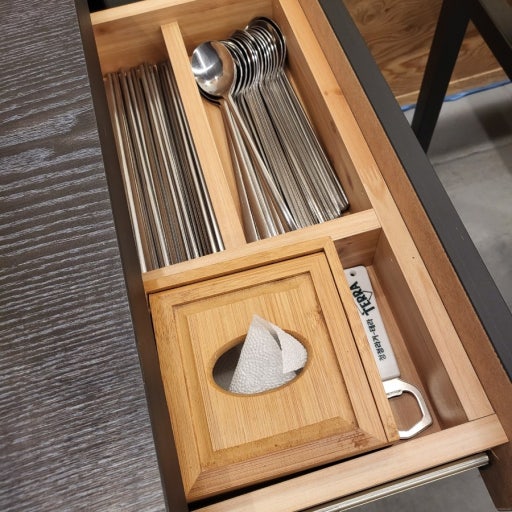
- Stainless steel chopsticks (jeotgarak)
- Flat, long-handled soup spoons (sutgarak)
- Napkins
- Often a bottle opener for beer and soju
A small local courtesy: If you are dining with friends, it’s polite to pull out the cutlery and lay it down for everyone at the table. A classic local habit is placing a clean napkin down first, then resting the spoon and chopsticks on top.
Don’t Make Awkward Eye Contact—Press the Bell
In many countries, waving your arm or catching a busy waiter’s eye across a crowded room can feel awkward. Korea solved this problem decades ago with the table call bell (ho-chul-bel).
Look around the table surface or along the wall next to your booth. That small plastic button isn’t an emergency alarm; it’s a direct chime to the kitchen.
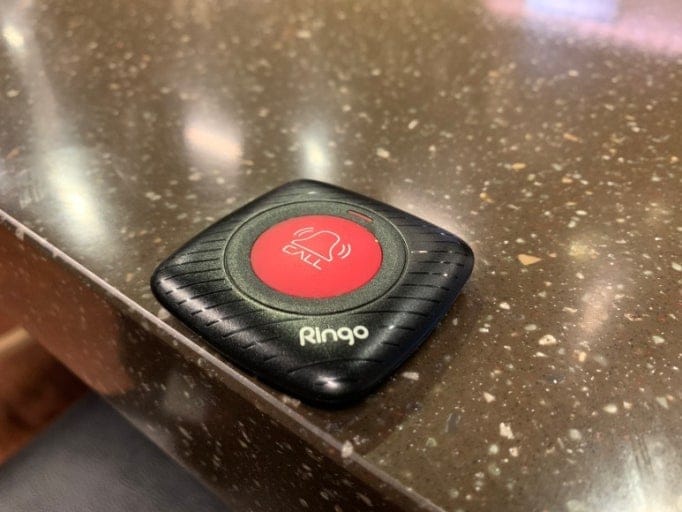
- Press it once when you are genuinely ready to order, need extra water, or want another round of drinks.
- It triggers a cheerful ding-dong chime throughout the dining room and flashes your table number on a digital screen near the kitchen.
- Is it rude? Not at all. In fact, staff prefer it because they don’t have to interrupt your conversation until you actively need them.
No bell at your table? Don’t whisper and wait. Simply raise your hand slightly and say clearly: “Jeo-gi-yo!” (저기요!), which translates to a polite “Excuse me, over here!”
Banchan: Free, Plentiful, and Refillable
One of the greatest joys of Korean dining is that ordering a single main dish instantly summons a miniature feast of small side dishes, known as banchan (반찬).
Depending on the restaurant, your table might be filled with crispy cabbage kimchi, pickled white radish, seasoned bean sprouts, braised potatoes, and rolled omelets.
Two critical rules about banchan:
- They are completely free: You never pay extra for side dishes; they are part of the hospitality.
- They are almost always refillable: When your favorite dish runs dry, hold up the small plate and say, “I-geo deo juseyo” (이거 더 주세요 – More of this, please).
Look out for the “Self Bar” (셀프 코너):
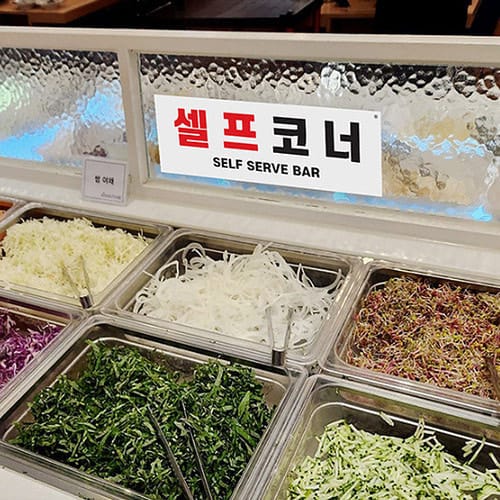
In modern or fast-casual restaurants, you might spot a stainless steel buffet cart labeled “Self” (셀프). That means refills on side dishes and drinking water are DIY. Grab a pair of tongs, top off your own plate, and take only what you plan to finish.
Tipping Is 0% (Seriously, Zero)
Here is the best news for your travel budget: There is absolutely no tipping in South Korea.
- The price printed on the wall menu is the exact final price you pay.
- VAT (value-added tax) is legally included in the menu price.
- There are no surprise service charges added to the bill at the end.
If you leave cash on the table when you leave, your server will likely chase you down the street to return the money you “accidentally forgot.” Good service is treated as a baseline standard included in the food, not an optional bonus you buy at the register.
Solo Dining (Honbap) Etiquette
South Korea has traditionally been a collective dining culture where large meals—especially Korean BBQ (samgyeopsal) and simmering hot pots (jeongol)—are designed to be shared.
While solo dining (Honbap / 혼밥) has exploded in popularity, some traditional venues still have minimum ordering rules:
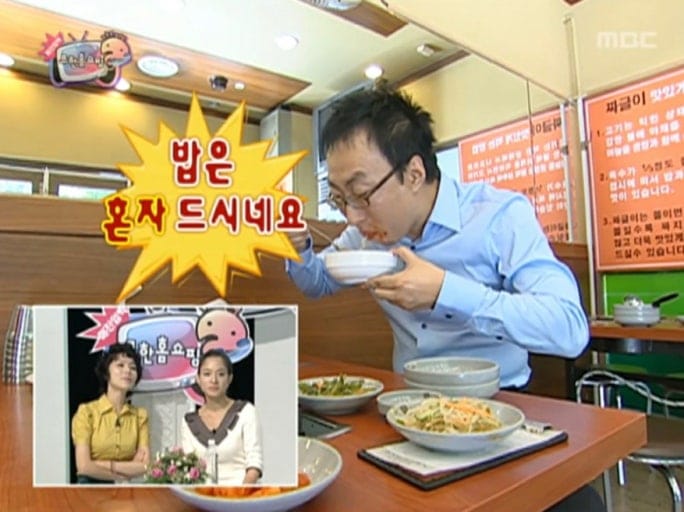
- At K-BBQ joints, you will often see a sign saying “Minimum 2 servings” (2인분 이상). If you are dining alone, you are usually welcome to eat, but you must order and pay for at least two portions of meat.
- Great solo-friendly alternatives: Soup restaurants (gukbap), handmade noodle shops (kalguksu), snack diners (bunsik like Gimbap Cheonguk), and any spot featuring bar counter seating.
How to Pay the Bill
In Korea, servers rarely bring a credit card machine to your table.
- Find your bill slip: When your food arrives, the server will usually tuck a small paper receipt or a plastic clipboard onto the corner of your table.
- Walk to the register: When you finish eating, pick up that paper slip and walk over to the payment counter near the exit door.
- Pay with card or cash: International credit cards (Visa, Mastercard) are accepted almost everywhere in cities.
A polite body language touch: When handing your card or cash to the cashier, offer it with both hands, or support your right wrist/forearm gently with your left hand. It’s a subtle traditional gesture of respect that local cashiers will immediately appreciate.
💬 Frequently Asked Questions (FAQ)
Q: Do I need to take my shoes off at Korean restaurants?
A: Most modern restaurants in Korea now feature standard tables and chairs. However, traditional venues (especially barbecue houses or country-style restaurants outside major tourist zones) still have raised wooden floor seating (ondol). If you see a sunken floor area or rows of shoes neatly lined up by the entrance, remove your shoes and slip into a pair of plastic slippers before stepping up. Wearing clean socks without holes is always a good travel habit in Korea!
Q: Is drinking water always free?
A: Yes. Drinking water is complimentary at virtually every restaurant. In casual spots, look for a refrigerated glass cabinet filled with water bottles and stainless steel cups with a sign that reads “물은 셀프” (Water is self-serve). Grab a cold pitcher and cups for your table yourself.
Q: Can I ask to pack leftover food to take home (Doggy bag)?
A: Yes, but with caveats. Packing leftover barbecue, fried chicken, or pancakes is completely normal. Just ask, “Po-jang hae juseyo” (포장해 주세요 – Please pack this to go). However, partially eaten communal soups or free side dishes are generally not packed to go due to food safety and local dining norms.
Q: What should I do if the menu is entirely in Korean?
A: Download the Papago translation app before your trip. Its real-time image translation feature reads Korean menus far more accurately than Google Translate, especially for unique cuts of meat and regional dishes. If you’re still unsure, look at what the tables around you are eating and politely point to what looks good!
Q: What does it mean when the scissors come to the table?
A: Don’t panic if your server places a large pair of kitchen shears next to your meal. In Korea, scissors are an everyday dining utensil used to cut long chewy noodles (like naengmyeon), thick slabs of kimchi, and grilling barbecue meats into bite-sized pieces. Feel free to use them whenever your food feels too big to handle with chopsticks.