

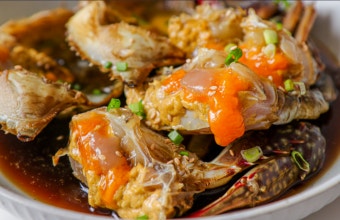
If you had to pick the most popular Korean dish right now, it would definitely be Ganjang Gejang (Soy Sauce Marinated Crab).
In the past, the fact that it is raw seafood made it a hard dish for foreign travelers to try. But now, it’s become a must-eat food when visiting South Korea. Here is a breakdown of why so many people love it, its history, how it’s made, and the best places to try it in Seoul.
1. Why Ganjang Gejang is So Popular Among Foreigners Right Now

Eye-Catching Videos on Social Media
- The Power of Mukbangs: Videos on YouTube and TikTok showing people squeezing out the raw crab meat with their hands, or mixing warm rice right into the crab shell, have gotten tons of views and made people all over the world curious.
- Great Photos for Your Feed: These mouth-watering videos easily catch people’s attention. If you post photos of the bright orange roe, crab meat, and rice soaked in soy sauce on your blog, your readers will love it.
That Deep Savory Flavor and the ‘Rice Thief’ Nickname
- A Burst of Flavor: This dish is full of “umami,” which means a deep, savory taste. The rich soy sauce, boiled with lots of fresh ingredients, perfectly balances the natural sweetness of the raw crab meat.
- The ‘Rice Thief’ (Bap-doduk): Once you taste it, the savory flavor is so good that you’ll finish a bowl of rice before you even know it. That’s why Koreans call it the “Rice Thief,” which is a fun cultural story to share with foreigners.
A Unique Texture and Healthy Ingredients
- A New Food Experience: For Westerners who are used to cooked seafood, the soft, melting, jelly-like texture of aged raw crab is a fun and special food adventure.
- A Healthy Traditional Food: As more people see K-Food as healthy, Ganjang Gejang—which takes a lot of time and care to make—is known as a high-quality, healthy traditional Korean dish.
2. The Origin and History of Ganjang Gejang
It was originally made to keep food from going bad. Back in the day, before refrigerators, people used salt, alcohol, vinegar, and soy sauce to keep seasonal seafood fresh. Ganjang Gejang was born from this older way of life.
According to old folk recipes, live crabs and beef were left together in a jar overnight so the crabs would eat the meat, and then soy sauce was poured in. This shows that people back then really cared about making it taste amazing, not just saving it for later.
Goryeo Dynasty

Early Records: The history of Koreans eating marinated crab goes back at least to the Goryeo Dynasty. Shipwrecks from 1208 were found with jars of freshwater crabs inside, with tags saying “salted crab.” A famous writer back then, Lee Gyu-bo, even wrote a poem about the great smell of opening a jar of marinated crab.
Joseon Dynasty

Served to Kings: Recipes started showing up in old guidebooks like the Sallim Gyeongje and Gyuhap Chongseo. Ganjang Gejang was loved by everyday nobles and even the royal family. King Gyeongjong, the 20th king of Joseon, was known to really enjoy it.
Modern Era

Getting its Name: For a long time, it was just called “Gejang” (marinated crab) because it was only made with soy sauce or salt. But after the Korean War, a spicy version made with red chili powder called “Yangnyeom Gejang” became popular. To tell them apart, the traditional soy sauce version became known as “Ganjang Gejang.”
3. The Recipe: Made with Time and Care
Ganjang Gejang is a slow food that needs fresh ingredients and very careful temperature control.
Step 1: Cleaning the Crab (Removing sharp parts and dirt)
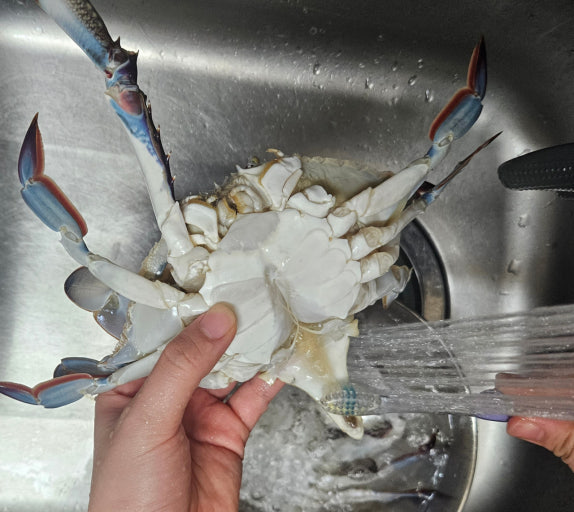
- Get fresh female crabs (or flash-frozen ones) full of bright orange roe in the spring.
- Scrub them well with a kitchen brush, open the belly shell to wash out any dirt, and cut off the sharp tips of the legs with scissors.
Step 2: Boiling the Soy Sauce (Making the savory base)
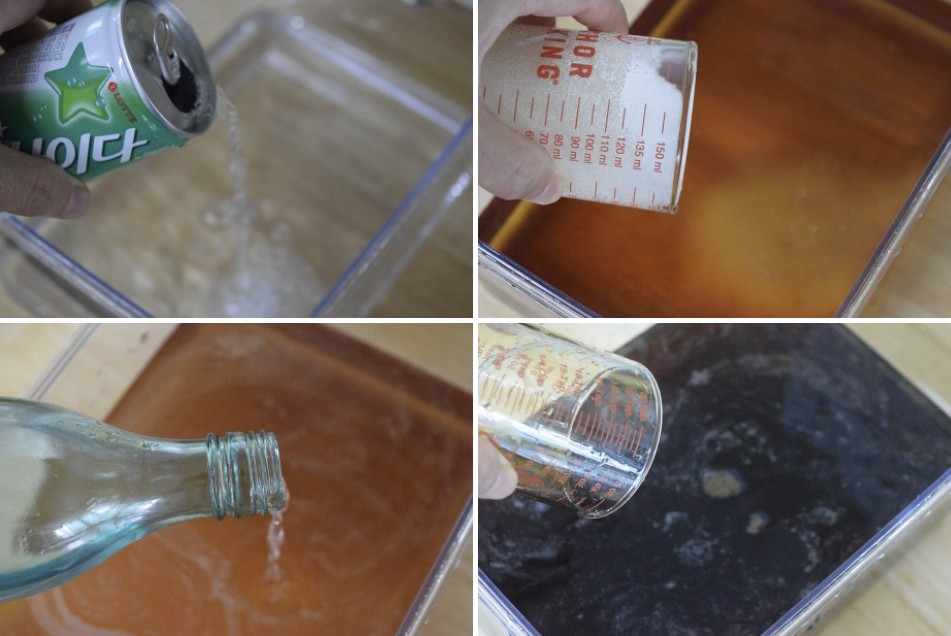
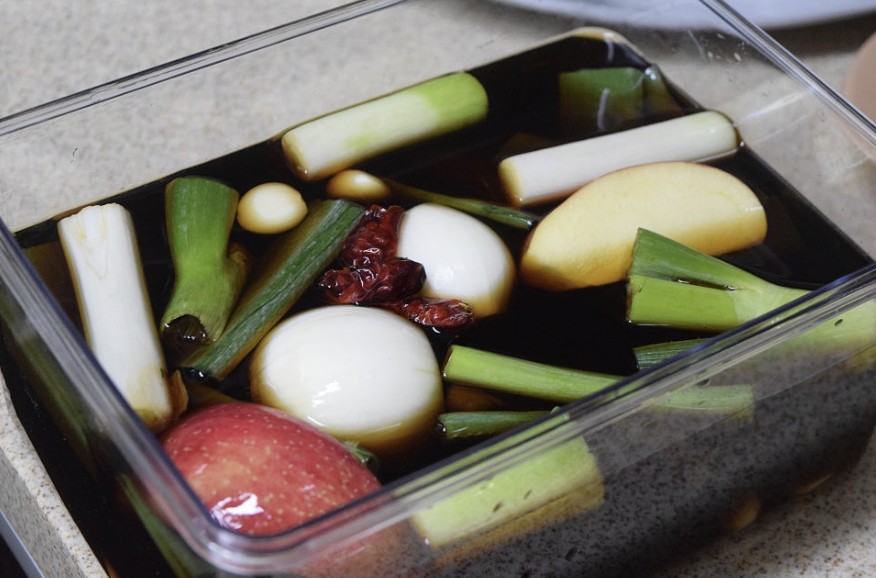
- Boil soy sauce, water, and rice wine (or mirin) in a pot with apples, onions, green onions, garlic, ginger, kelp, whole black peppers, and dried red peppers.
- 100ml Sprite, 1L water, 125ml plum extract, 125ml sugar, 25ml Soju, 250ml anchovy fish sauce, 100ml soy sauce, 1/2 apple, 1 large green onion, 2 handfuls of peeled garlic, 1 onion, 4 chili peppers
- Once it boils, turn the heat to medium and let it cook for about an hour to bring out the deep, sweet flavors of the vegetables and fruits.
Step 3: Cooling the Soy Sauce Completely (The Most Important Step)
- Strain the boiled soy sauce and let it cool down all the way to room temperature or colder.
- If the soy sauce is even a little bit warm when you pour it, the crab meat will cook, and you’ll lose that soft, jelly-like texture that makes the dish so good.
Step 4: The First Aging (Placing them belly up)
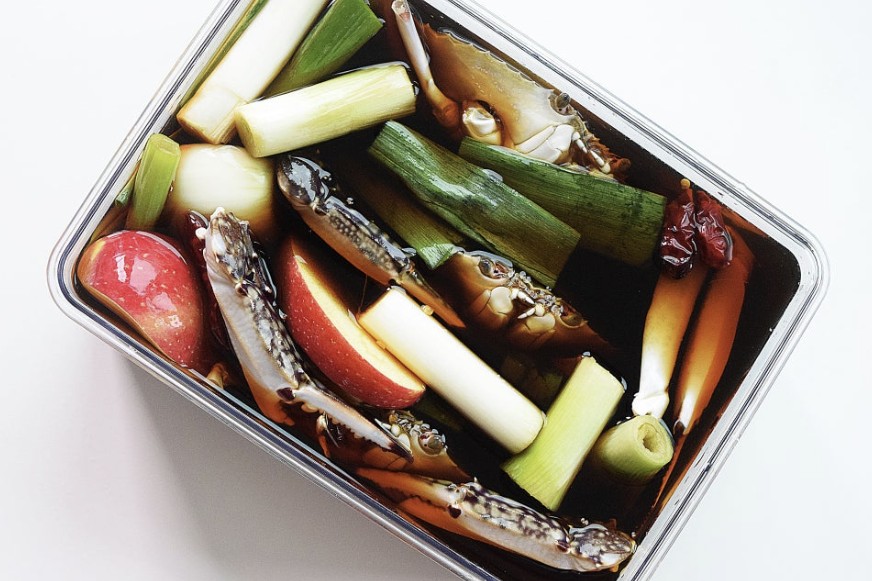
- Put the crabs in a clean, airtight container with their bellies (the white part) facing up so the roe doesn’t spill out.
- Pour the cold soy sauce over the crabs until they are completely covered, and put them in the fridge for 1 to 2 days.
Step 5: Boiling Again and Second Aging (For better taste and freshness)
- After 1 to 2 days, drain only the soy sauce back into a pot and boil it again to clean it and make it safer to eat.
- Cool the soy sauce completely one more time, pour it back over the crabs, and let it sit. Doing this one or two times gives you the best, deepest flavor by day 3 or 4.
4. How to Eat Ganjang Gejang Like a Local
If this is your first time eating raw marinated crab, you might be wondering where to start. Most restaurants will give you disposable plastic gloves so you can eat comfortably. Here is a simple guide on how locals eat it:
Step 1: Squeeze out the Meat
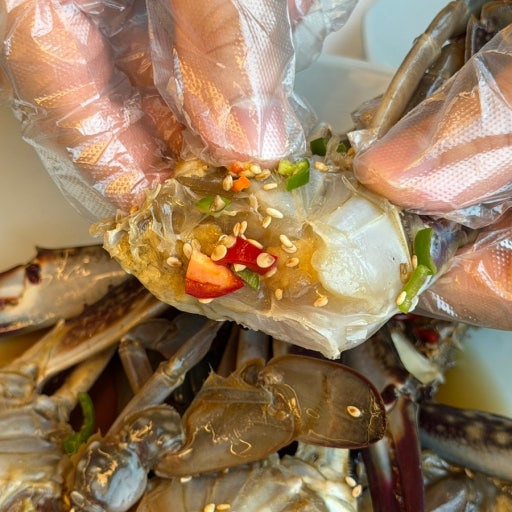
Put on your plastic gloves, grab a piece of the crab body, and give it a firm squeeze. You will see the soft meat and orange roe slide out. Put this directly onto a spoonful of warm rice and take a bite.
Step 2: Wrap it in Seaweed
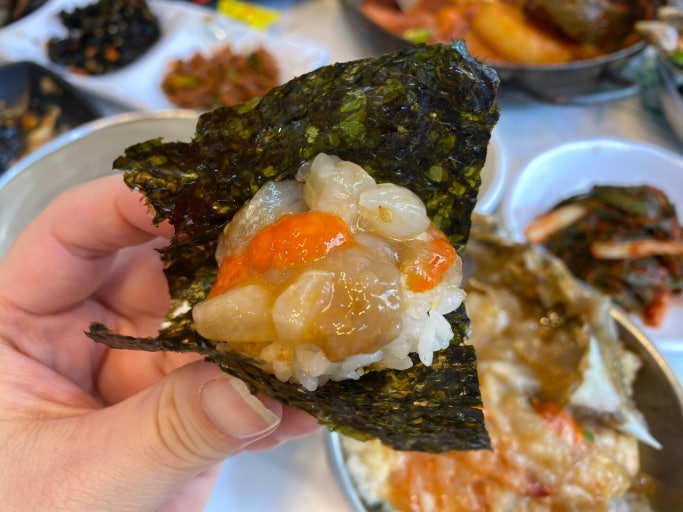
Take a piece of unseasoned roasted seaweed (Gim, which usually comes as a side dish), add some rice, and put the crab meat on top. If you like a little extra flavor, add a small piece of green chili or garlic from your table. The crispy seaweed goes really well with the soft crab.
Step 3: The Best Part (Mixing Rice in the Shell)
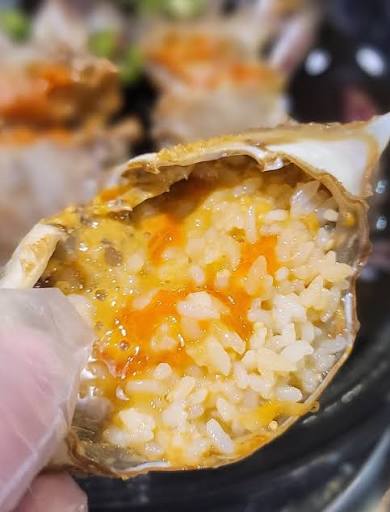
Make sure you don’t throw away the top shell! There is a lot of flavorful tomalley and roe hidden inside. Put a few spoonfuls of warm rice straight into the shell, add a little bit of the soy sauce, and mix it well with your spoon. This mixed rice is usually everyone’s favorite part of the meal and the real reason we call it the “Rice Thief.”
5. Seoul Ganjang Gejang Top Restaurant Guide & Transit
Here are three well-known places in Seoul where foreign travelers can try great Ganjang Gejang.
| Restaurant Name | Key Features | Price Range |
| Jinmi Sikdang | Michelin Guide Seoul winner, only sells one set menu, great flavor balance | ₩40,000 ~ ₩50,000 |
| Keunkiwajip | Uses soy sauce aged for 7 years, quiet and traditional Hanok style | ₩30,000 ~ ₩70,000 |
| Odarijip | Right in the middle of Myeongdong, very friendly to foreigners, lots of reviews | ₩30,000 ~ ₩50,000 |
1. Jinmi Sikdang
Details: Always listed in the ‘Michelin Guide Seoul,’ this is a must-visit spot for locals and tourists alike. They only serve the ‘Ganjang Gejang Set,’ using top-quality female crabs from the West Coast to give a clean, deep taste that isn’t too fishy.
Transit: About a 5-minute walk from Exit 4 of Aeogae Station (Line 5). If you’re coming from the airport on the AREX train, it’s super easy—just transfer at Gongdeok Station and go one stop.
Travel Tip: It’s so popular that you almost can’t just walk in. It’s a good idea to book a table ahead of time using travel apps.
2. Keunkiwajip
Details: Near Bukchon Hanok Village, this is a famous place where you can eat inside a beautiful traditional Korean house. They make their crab with a special soy sauce that has been aged for over 7 years, giving it a very deep and slightly sweet taste.
Transit: A 5-minute walk from Exit 2 of Anguk Station (Line 3). It’s a perfect stop if you’re touring spots like Gyeongbokgung Palace or Bukchon Hanok Village.
Photo Tip: This is a great place to take pictures. The bright orange crab looks beautiful served in traditional brass bowls against the classic wooden house background.
3. Odarijip
Details: Located right in Myeongdong, which is a huge shopping spot for tourists, so it’s very easy to get to. It has thousands of reviews online. The staff is very friendly, and the K-Pop playing in the background makes it a fun, easy place for beginners to try the dish.
Transit: A 2-minute walk from Exit 5 of Myeongdong Station (Line 4). It’s easy to find and you won’t get lost in small alleys.
Travel Tip: Since it’s right in Myeongdong, it’s easy to plan a day of shopping around your meal, or book a hotel nearby.
💬 Frequently Asked Questions (FAQ)
- Q: Is it really safe to eat raw crab?
- A: Yes, absolutely! The crabs used for Ganjang Gejang are prepared using extremely fresh catches. The process of repeatedly boiling and cooling the highly concentrated soy sauce naturally preserves and ferments the crab. Famous restaurants like Jinmi Sikdang and Keunkiwajip strictly manage their ingredient hygiene and freshness, so you can enjoy your meal with complete peace of mind.
- Q: It’s my first time trying Ganjang Gejang. What is the best way to eat it?
- A: Most restaurants will provide disposable plastic gloves. Put on a glove, grab a piece of the crab body, and gently squeeze the soft, jelly-like meat out with your fingers onto a spoonful of warm rice. For the grand finale, do not forget to add a spoonful or two of rice directly into the crab shell (the carapace) and mix it well with the tomalley and roe hidden inside. This is the absolute highlight of the meal!
- Q: Can I bring a companion who doesn’t eat raw seafood or shellfish?
- Yes! Even at specialized Ganjang Gejang restaurants, there are plenty of alternatives. When you order Ganjang Gejang, it comes with a generous spread of various banchan (side dishes), hearty stews, and fluffy steamed eggs. Many places also offer spicy marinated crab (Yangnyeom Gejang) or seafood scallion pancakes. However, please exercise extreme caution if you or your companion has a severe shellfish allergy or a gluten allergy (as soy sauce contains wheat).
- Q: Is a reservation required? What if I don’t speak Korean?
- A: For famous Michelin-starred spots like Jinmi Sikdang, reservations are practically required. If calling in Korean feels daunting, it is highly recommended to use restaurant reservation services through global travel platforms. Tourist-friendly spots in Myeongdong, like Odarijip, have multilingual staff and are much easier to visit as a walk-in without a reservation.
- Q: Do I need to tip at Korean restaurants?
- A: No, not at all! South Korea has a strict no-tipping culture. All service fees are already included in the prices listed on the menu. Once you finish your meal, you simply bring your bill to the front counter and pay the exact amount written on the receipt.