

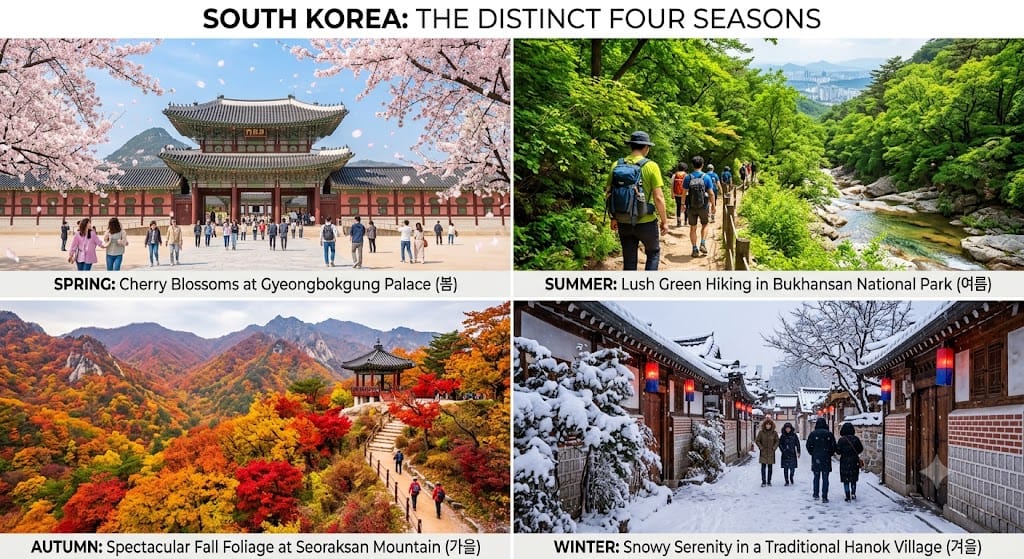
When planning a trip to South Korea, the very first thing you need to think about is the season. Korea has four extremely distinct seasons—spring, summer, fall, and winter—so depending on the month you visit, the scenery, the weather you feel, and what you need to pack will completely change.
To help you plan the perfect trip, I’ve put together the ultimate guide covering Korea’s climate, average temps and humidity, and the best times to visit, complete with vivid photos I took myself while traveling all over the country!
📅 A Quick Glance at Korea’s 4 Seasons
| Season | Months | Avg. Temp & Humidity | Weather Vibe & Highlights | Rating |
| Spring | Apr – May | 10~20°C (50~68°F) Humidity 50~60% | Perfect weather—not too hot or cold. The whole country is covered in cherry blossoms. | ⭐⭐⭐⭐⭐ (The Best) |
| Summer | Jun – Aug | 23~30°C+ (73~86°F+) Humidity 70~90% | Monsoon rains and heatwaves. It’s super humid, sweaty, and steamy. | ⭐⭐⭐ (Average) |
| Autumn | Sep – Oct | 10~20°C (50~68°F) Humidity 50~60% | Clear blue skies with zero smog! The cool breeze and fall foliage are pure art. | ⭐⭐⭐⭐⭐ (The Best) |
| Winter | Dec – Feb | -5~5°C (23~41°F) Humidity 40~50% | Freezing Arctic chill. But you get breathtaking, romantic snowy landscapes. | ⭐⭐⭐⭐ (Great) |
💡So, when is the absolute best time to visit?
- The undeniable best seasons for a Korea trip are Autumn (Sep-Oct) and Spring (Apr-May)
- With comfortable temperatures, perfect humidity, and endless clear skies, you can take your camera anywhere and snap the photo of a lifetime.
- It’s the perfect time to freely roam the entire country, from Seoul down to Jeju Island, without suffering from extreme heat or cold.
PART 1. Seasonal Travel Guide: When, Where, and What to Wear?
Because Korea’s four seasons are so different, you need a customized game plan for each one. Here’s a breakdown of the specific weather stats, the best places to go, and practical packing tips based on what locals actually wear.
🌸 1. Spring (March – May): The Season of Blossoms and Fresh Breezes
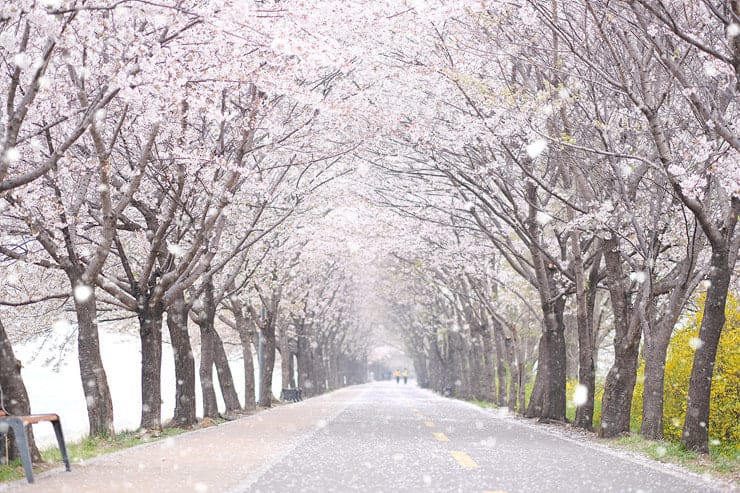
This is the perfect time to ditch the heavy winter coats and get outside. The streets are filled with cherry blossoms and forsythias, making every traveler’s heart flutter.
- 🌡️ Weather Stats
- Temp: 10°C ~ 20°C (50°F ~ 68°F)
- Humidity: 50% ~ 60% (Very comfortable)
- Good to know: The weather is flawless, but March and April can sometimes bring fine dust or yellow dust from the continent, so it’s smart to pack a few face masks just in case.
- Where to Go?
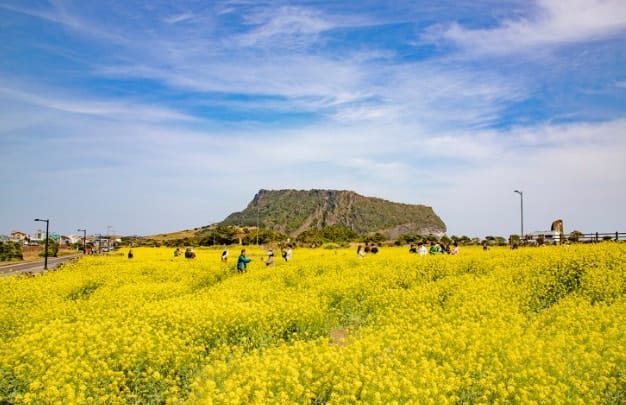
- In late March to early April, head south to Jeju Island or Jinhae. You’ll see endless fields of yellow canola flowers mixed with stunning cherry blossoms.
- In mid-April, visiting the royal palaces in Seoul (like Gyeongbokgung or Changdeokgung) is a must. Rent a traditional Hanbok and stroll through the palaces under falling cherry blossom petals.
- 👗 Packing List (Clothing Tips)
- Keyword: Layering
- The sun is warm during the day, but the wind gets pretty chilly in the mornings and evenings. Your best bet is to wear a short-sleeve or light long-sleeve shirt and layer it with a cardigan, a light jacket, or a trench coat that you can easily take off and put back on.
🌊 2. Summer (June – August): Beach Vibes and Indoor Escapes
Korea’s summer isn’t just hot; the humidity is intense, making it feel much hotter than the thermometer says. July brings the “monsoon season” (Jangma) with weeks of heavy rain, and August brings “tropical nights” where it stays hot even after the sun goes down.

- 🌡️ Weather Stats
- Temp: 23°C ~ 30°C+ (73°F ~ 86°F+). Mid-August afternoons can easily top 35°C (95°F).
- Humidity: 70% ~ 90%+ (Feels like a sauna)
- Good to know: You will sweat a lot, and it can feel a bit muggy. Staying hydrated is a must!
- Where to Go?
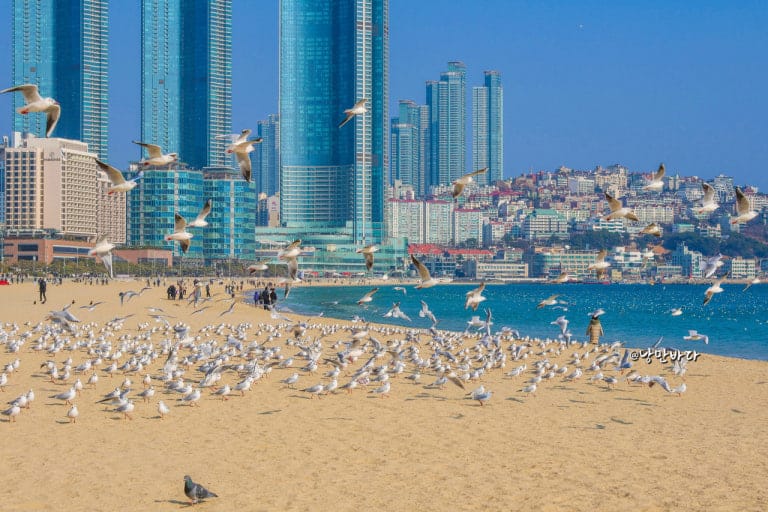
- Head to the East Coast cities like Yangyang and Gangneung for surfing and beach vibes, or visit the bustling coastal city of Busan for ocean activities.
- When the afternoon heat becomes too much or a sudden downpour hits, flexibly shift your plans indoors. Seoul has massive, heavily air-conditioned spots like COEX Mall, The Hyundai Seoul, museums, and indoor theme parks.
- 👗 Packing List (Clothing Tips)
- Keyword: Breathable Fabrics & Umbrellas
- Pack breathable, sweat-wicking clothes like linen or thin cotton t-shirts and shorts.
- Always carry a sturdy, compact folding umbrella for sudden guerrilla rainstorms, and a mini handheld fan. Also, pack one thin outer layer—the AC inside malls and cafes can be freezing!
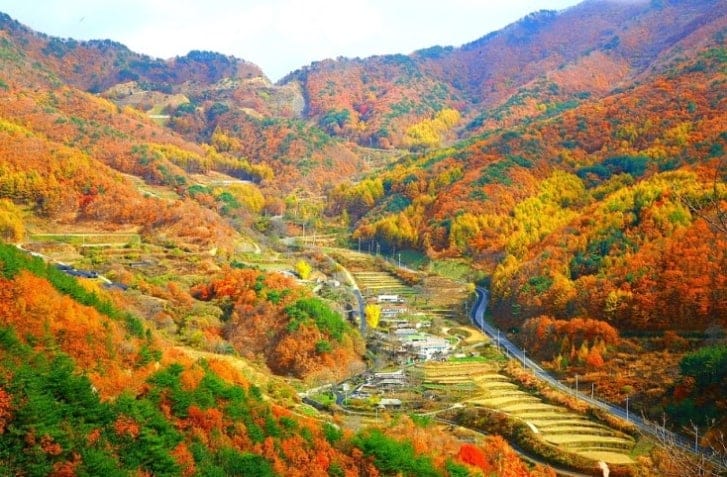
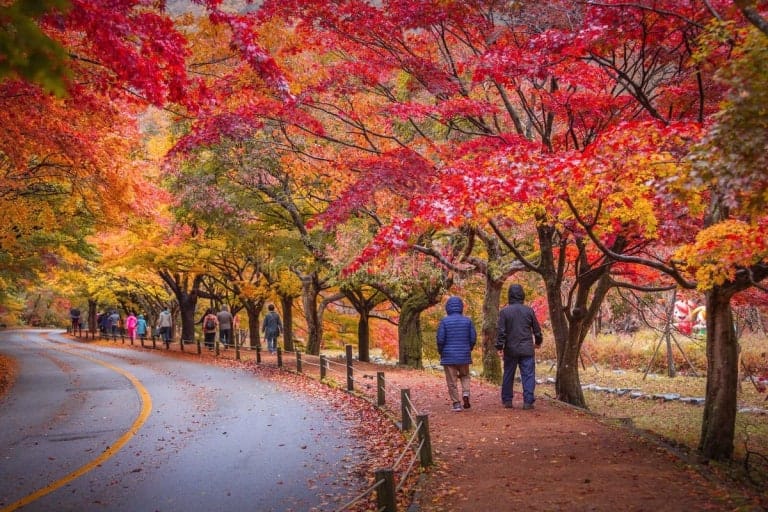
🍁 3. Autumn (September – November): Crisp Air and Fall Foliage
The sticky summer humidity completely vanishes, leaving behind crisp, dry air. Honestly, just walking down the street feels like a healing experience.
- 🌡️ Weather Stats
- Temp: 10°C ~ 20°C (50°F ~ 68°F)
- Humidity: 50% ~ 60% (Cool and refreshing)
- Good to know: The wind starts to get quite brisk by late October.
- Where to Go?
- Between mid-October and early November, you absolutely have to visit Seoraksan (Gangwon Province) or Naejangsan (Jeolla Province). Entire mountains turn into tunnels of vibrant red, orange, and yellow leaves—it’s an unforgettable view.
- Seafood is incredible during this season. Make sure to stop by a coastal city or a traditional market to try Ganjang Gejang (soy sauce marinated crab). Koreans call it a “rice thief” because it’s so savory and delicious you’ll eat bowls of rice with it!
- 👗 Packing List (Clothing Tips)
- Keyword: Light Outerwear
- Like spring, the temperature drops significantly at night. A light long-sleeve shirt is fine for the daytime, but you’ll definitely need a cozy knit sweater, a fleece, or a leather jacket once the sun sets.
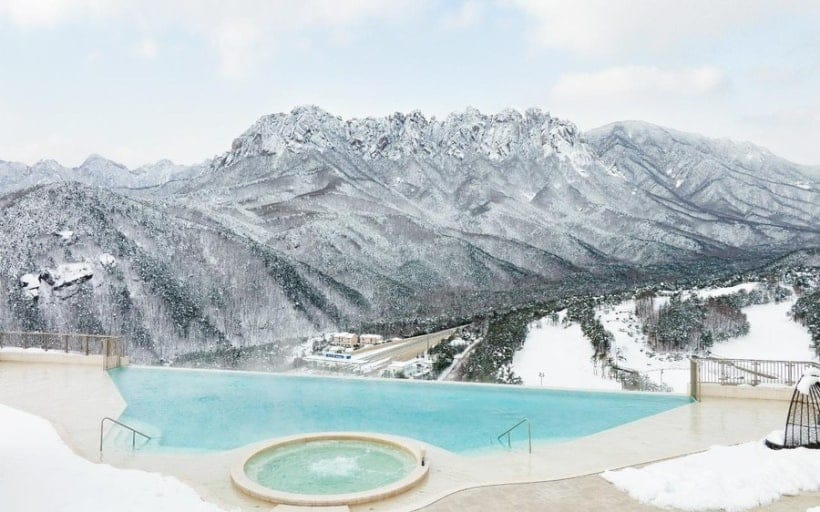
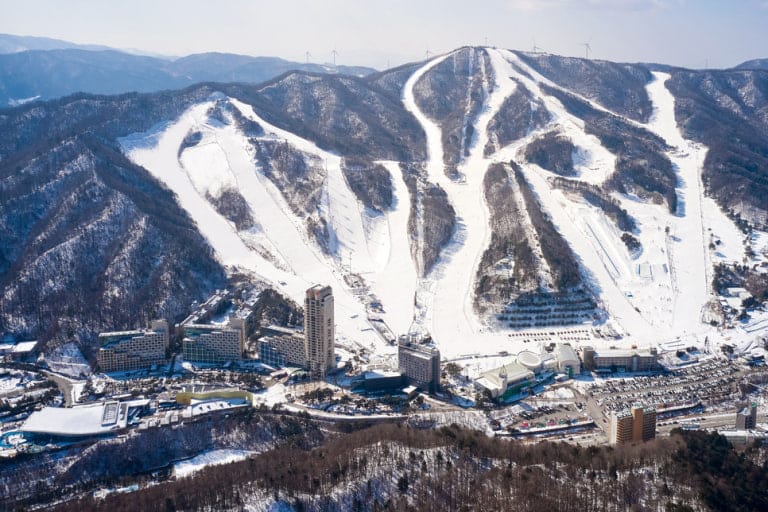
❄️ 4. Winter (December – February): Romantic Snowscapes and Hot Springs
Thanks to cold winds blowing down from Siberia, Korean winters are freezing and dry. But it makes up for the cold with romantic snowy mountain trails and piping hot street foods like Hotteok (sweet pancakes) and Bungeoppang (fish-shaped pastries).
- 🌡️ Weather Stats
- Temp: -5°C ~ 5°C (23°F ~ 41°F). During cold snaps, it drops below -10°C (14°F).
- Humidity: 40% ~ 50% (Very dry)
- Good to know: You’ll deal with static electricity and dry skin, so bring a good moisturizer and lip balm.
- Where to Go?
- If you love winter sports like skiing or snowboarding, head straight to the resorts in Pyeongchang or Hongcheon.
- Hiking snow-covered mountains like Hallasan (Jeju) or Deogyusan is spectacular. Alternatively, melting your frozen body in an outdoor hot spring is one of the best winter choices you can make.
- 👗 Packing List (Clothing Tips)
- Keyword: Full Protection (Survival over Style)
- Forget fashion; winter here is about survival. A “long padding” (a thick, knee-length down jacket) is basically the Korean winter uniform.
- Wear several thin layers instead of one chunky sweater, and make sure your base layer is thermal wear (like Heattech). You must cover any exposed skin with gloves, a thick scarf, and a beanie.
PART 2. Korea’s Climate Secrets: Why is the Weather so Dynamic in a Small Country?
You might wonder how such a relatively small country can have such dramatic shifts in weather and scenery. Knowing a little bit about the geography makes experiencing the weather here so much more interesting!
1. A Mix of Cosmic Angles and Battling Winds
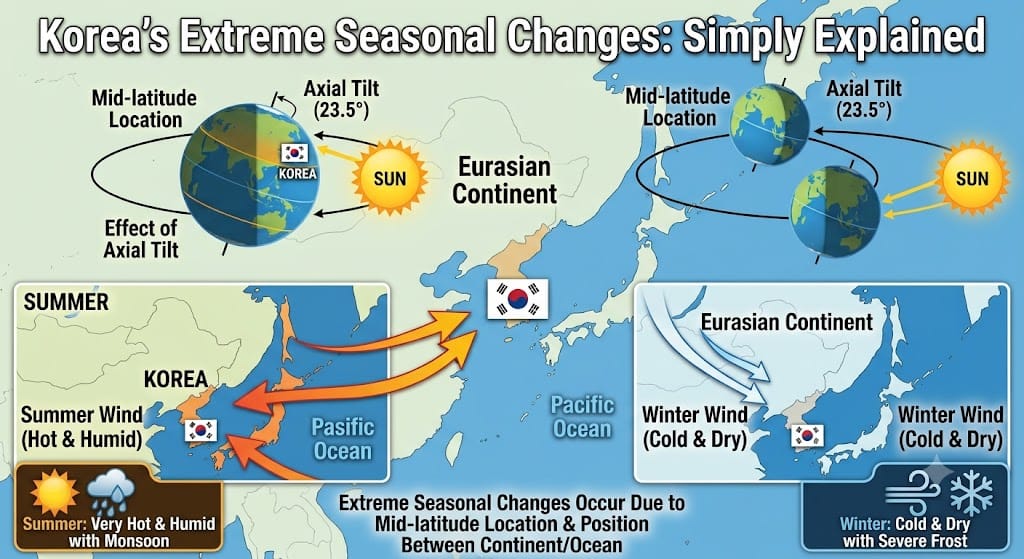
Korea is located in the mid-latitudes, right between the equator and the North Pole. As the Earth orbits the sun, this middle zone experiences the most drastic changes in sun angles and daylight hours.
Plus, Korea is sandwiched between the massive Eurasian continent and the vast Pacific Ocean. In the summer, it gets hit by hot, wet ocean winds, and in the winter, it gets blasted by bone-chilling continental winds. This creates extreme seasonal shifts.
2. The Magic of 70% Mountains and a 3-Sided Ocean
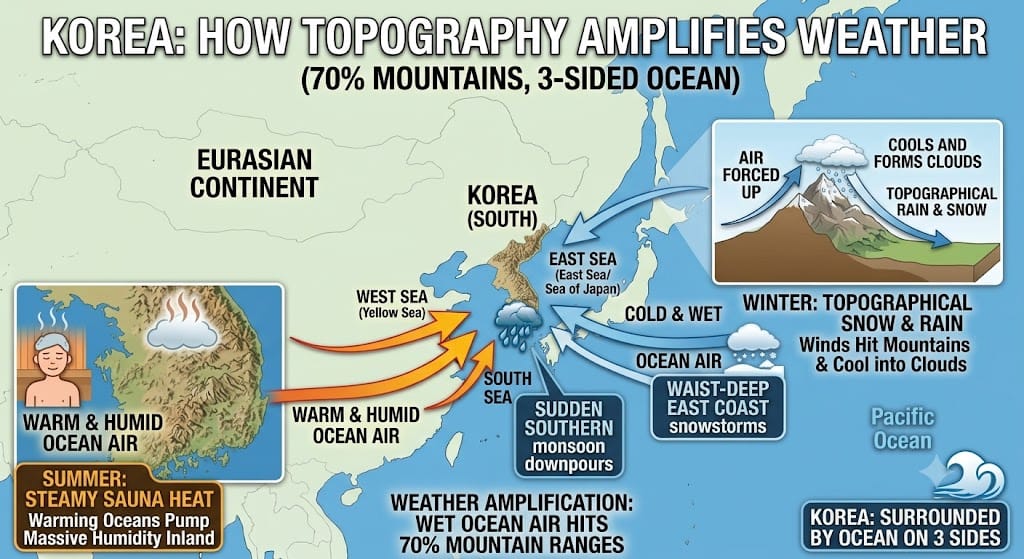
Korea is surrounded by water on three sides, and about 70% of the land is covered in rugged mountains. This unique topography amplifies the weather into something spectacular.
Steamy, Sauna-like Heat: In the summer, the warming oceans pump massive amounts of moisture over the land. That’s why Korean summers aren’t just hot; they are incredibly humid, making it feel like you’re walking through a steam room.
Topographical Rain & Snow: When that wet ocean air blows inland and hits the high mountain ranges, it’s forced upward, rapidly cooling and turning into massive rain or snow clouds. This is exactly why the southern regions get sudden, explosive monsoon downpours in the summer, and the east coast gets waist-deep snowstorms in the winter.
3. Why is the South (Busan/Jeju) So Much Warmer than Seoul?
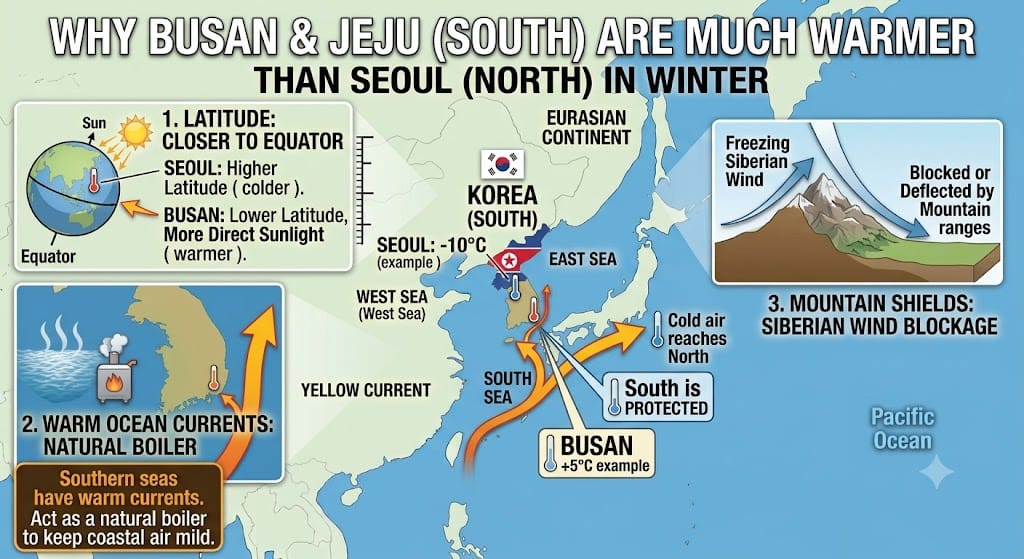
If you watch the local weather forecast in winter, Seoul might be freezing at -10°C, while southern cities like Busan or Jeju Island are sitting at a comfortable, positive 5°C. There are three reasons for this:
- Latitude: The further south you go, the closer you get to the equator, meaning you get slightly more direct, warming sunlight.
- Warm Ocean Currents: The southern seas have warm currents flowing through them year-round. They act like a giant “natural boiler,” keeping the coastal air surprisingly mild even in winter.
- Mountain Shields: When those harsh, freezing Siberian winds blow down from the north in winter, the mountain ranges cutting across the middle of the country act like a massive shield, blocking a lot of the cold air from reaching the southern coast.
Korea’s weather is a fascinating masterpiece created by the sun, the ocean, and the mountains. No matter which season you decide to visit, Korea will offer you unforgettable landscapes, vibes, and food that are entirely unique to that time of year.
Go check your closet and suitcase, and start planning your epic trip to South Korea!
💬 Frequently Asked Questions (FAQ)
- Q: I keep hearing about “fine dust” (Mise-meonji). What is it, and when is it the worst?
- A: Yeah, this is something you should definitely know about before coming. “Fine dust” is air pollution (particulate matter) that can make the sky look grey and hazy. While some of it comes from local traffic and factories, a massive amount of yellow dust and industrial smog blows in from the Asian continent (mainly China) during certain times of the year due to seasonal westerly winds.
It is usually at its worst in Spring (March and April), and sometimes during the winter months.
Pro Tip: Download an air quality app like AirVisual or the local favorite MiseMise. If the app shows a bad air day, do what the locals do: pop into any convenience store, grab a “KF94” face mask, drink plenty of water, and move your itinerary indoors for the day.
- A: Yeah, this is something you should definitely know about before coming. “Fine dust” is air pollution (particulate matter) that can make the sky look grey and hazy. While some of it comes from local traffic and factories, a massive amount of yellow dust and industrial smog blows in from the Asian continent (mainly China) during certain times of the year due to seasonal westerly winds.
- Q: Does Korea get typhoons or severe storms?
- A: Yes, we do. Korea’s typhoon season usually hits in late summer to early autumn (August and September).
Most of the time, they just bring a few days of heavy rain and strong winds, but 1 or 2 major typhoons might directly hit the southern regions like Jeju Island or Busan each year. If you happen to be here during a typhoon warning, ferries and flights will likely be canceled. The best thing to do is stay safely inside your hotel, order some amazing Korean delivery food, and wait it out!
- A: Yes, we do. Korea’s typhoon season usually hits in late summer to early autumn (August and September).
- Q: I’m coming in winter. What is “Ondol” heating?
- A: Oh, you are going to love this! Ondol is Korea’s traditional underfloor heating system, and it is built into almost every house, hotel, and Airbnb in the country.
Instead of blowing dry, hot air from a vent on the ceiling, pipes under the floor heat the ground directly. It’s the reason why Koreans traditionally take their shoes off indoors and love sitting or sleeping on the floor. After a freezing day out in the snow, lying flat on a toasty ondol floor is pure heaven. It completely melts your fatigue away.
- A: Oh, you are going to love this! Ondol is Korea’s traditional underfloor heating system, and it is built into almost every house, hotel, and Airbnb in the country.
- Q: Are there any must-have apps for checking the weather in Korea?
- A: Global weather apps on your phone work okay, but they can sometimes be inaccurate here.
For the most precise local weather and rain radar, I highly recommend downloading the Naver app. Also, definitely download Papago—it’s the absolute best translation app for Korean. If you ever need to buy a specific type of clothing, an umbrella, or medicine for a cold, Papago will save your life when communicating with shop owners!
- A: Global weather apps on your phone work okay, but they can sometimes be inaccurate here.