Why Giant Red Basins Appear Across Korea Every November
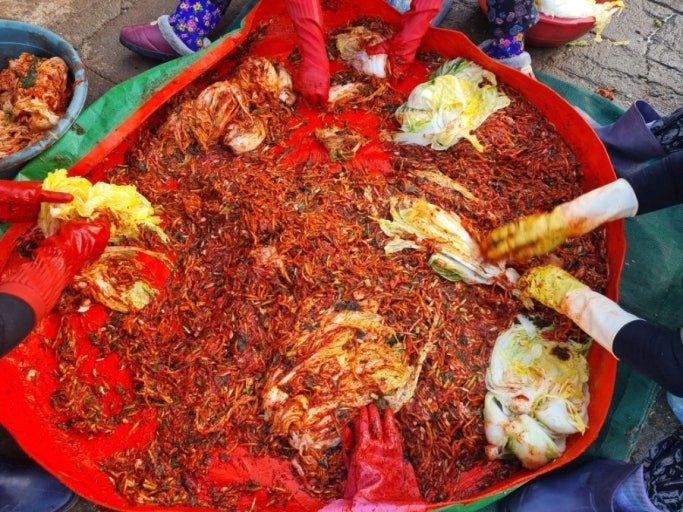
Walk through a neighborhood market in Seoul, Jeonju, or Busan in mid-November, and the scenery shifts overnight. Delivery trucks idle at the curb stacked shoulder-high with green Napa cabbages. Hardware stores pile bright red plastic basins onto the sidewalk alongside bundles of thick, elbow-length pink rubber gloves.
This is the arrival of Kimjang (kimjang / 김장)—Korea’s centuries-old communal ritual of preparing and sharing enough kimchi to carry families through the freezing winter.
While anyone can buy a small pouch of factory-made kimchi at a convenience store in thirty seconds, millions of Koreans still clear their calendars for a weekend in late autumn to sit on the kitchen floor, chop radishes by the dozen, and rub crimson chili paste between every single cabbage leaf by hand.
More Than Food Prep: Why UNESCO Recognized Kimjang

Long before modern heated apartments and 24-hour supermarkets, Korean winters were unforgiving. Once the ground froze in December, fresh vegetables disappeared until spring. Kimjang was how communities survived.
Because brining, washing, and seasoning fifty to a hundred heads of cabbage is exhausting work for one person, kimjang evolved into a neighborhood rotation. Relatives and next-door neighbors pooled their labor—moving from one house to the next over several days—and made sure no household faced the winter with an empty pantry.
In 2013, the United Nations officially inscribed Kimjang, making and sharing kimchi in the Republic of Korea onto the UNESCO Representative List of the Intangible Cultural Heritage of Humanity. UNESCO didn’t recognize a specific recipe; it recognized the spirit of sharing. Even today, the unspoken finale of any kimjang weekend is packing heavy lock-and-lock containers into the trunk of a car or mailing styrofoam boxes across the country to adult children, college students, and neighbors.
The Real Reward of Kimjang Day: Suyuk and Fresh Kimchi
Ask any Korean what they look forward to most during kimjang season, and they won’t talk about eating fermented kimchi in February. They will talk about the feast that happens on the living room floor five minutes after the last cabbage is packed away.
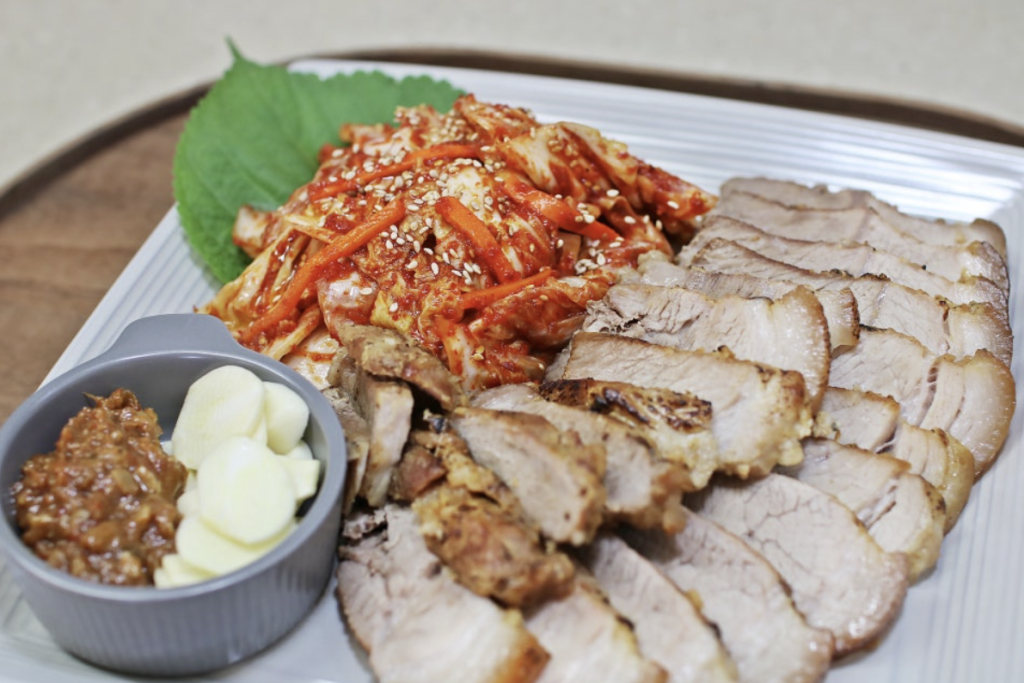
To thank everyone who spent the morning elbow-deep in garlic and chili flakes, the host simmers a large pot of pork belly or pork shoulder infused with doenjang (soybean paste), ginger, garlic, and scallions.
When the meat is sliced warm and tender—a dish called suyuk (suyuk / 수육)—it is eaten wrapped inside a crisp, bright-yellow inner cabbage leaf smeared with freshly mixed, unfermented kimchi seasoning (geotjeori / 겉절이).
The contrast is unforgettable: the rich, buttery warmth of the boiled pork cuts right through the crunchy, garlicky heat of the raw cabbage and sweet radish strips. In Korean restaurants, this iconic pairing is served year-round as bossam (보쌈, kimchi cabbage wraps with pork). During November and December, many traditional shops upgrade the platter with fresh, briny winter oysters—a seasonal delicacy known as gul-bossam.
Regional Flavors and Korea’s “Second Refrigerator”
Not all kimjang kimchi tastes the same. Because fermentation speed depends on temperature, recipes change dramatically as you travel down the Korean peninsula.
| Region | Flavor Profile | Signature Ingredients |
|---|---|---|
| Seoul & Gyeonggi (Central) | Clean, crisp, mild, and refreshing | Salted tiny shrimp (saeujeot), julienned pear, chestnuts, moderate chili |
| Jeolla & Gyeongsang (South) | Bold, rich, deeply savory, and spicy | Anchovy fish sauce, thick chili paste, raw oysters or salted hairtail |
| Gangwon (East Coast) | Fresh, oceanic, and tangy | Slices of raw squid or pollack tucked between the cabbage leaves |
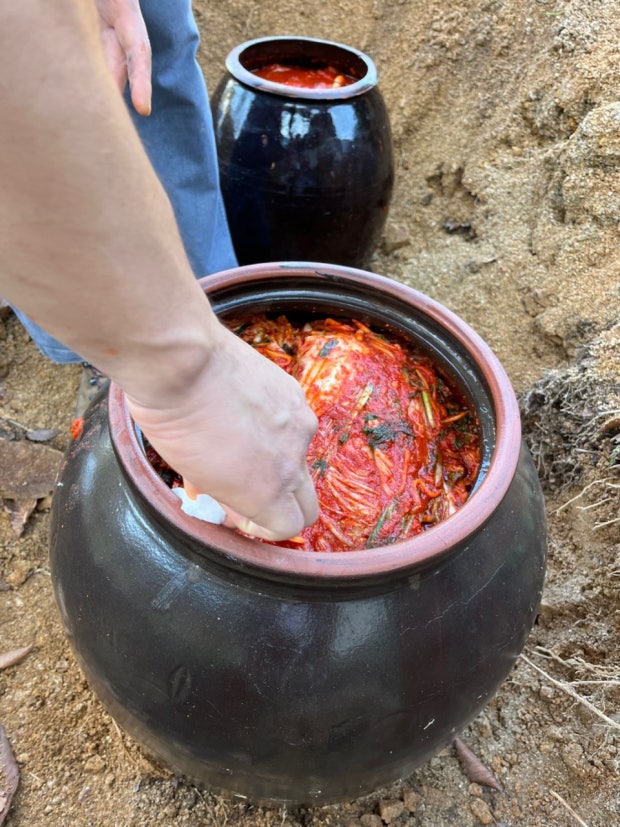
Historically, families buried huge glazed earthenware jars (onggi) neck-deep in the backyard soil to keep the kimchi at a steady, cool temperature just above freezing.
In modern high-rise apartments, burying pots in the yard isn’t an option. Instead, nearly every Korean household owns a second, specialized appliance: the Kimchi Refrigerator. Engineered with precision cooling coils that mimic underground soil temperatures, these chest or standing fridges prevent kimchi from souring too quickly and keep the sharp garlic aroma from taking over the rest of the kitchen’s groceries.
How Travelers Can Experience Kimjang Season in Korea
You don’t need a Korean grandmother’s invitation to taste the best of kimjang season during your autumn or winter trip:
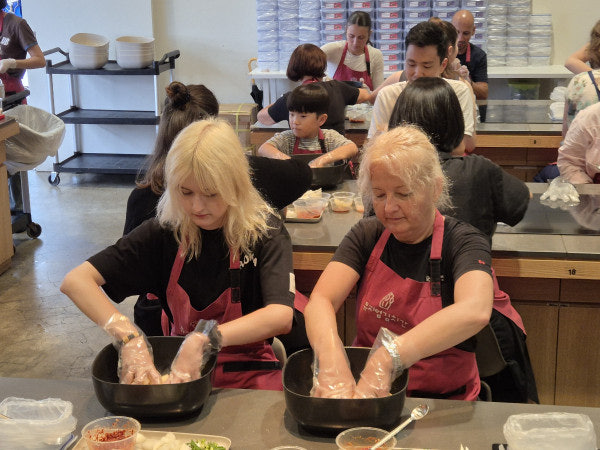
- Join a Hands-On Kimchi Workshop in Insadong: Located in the heart of Seoul’s traditional arts district, Museum Kimchikan is Korea’s oldest kimchi museum (Visit Seoul Museum Kimchikan Guide). You can explore three floors of fermentation history, taste different varieties, and join an English-friendly class where you rub seasoning into your own cabbage and leave with a vacuum-sealed pack.
- Visit Seoul’s Bossam Alley in Jongno: Head to the narrow backstreets near Jongno 3-ga Station in the evening. Order a medium platter of gul-bossam (boiled pork with fresh raw oysters and crisp kimjang-style cabbage) to experience the exact flavor combination locals celebrate every November.
- Look for “Haenam Cabbage” and “Geotjeori” on Menus: From November through December, even neighborhood soup diners brag about their newly made kimchi. If you see a hand-written sign on a restaurant wall mentioning fresh kimchi, don’t skip a single bite on your side dish tray.
💬 Frequently Asked Questions (FAQ)
Q: Is traditional kimjang kimchi vegetarian or vegan?
A: Usually, no. While the main body of kimchi is Napa cabbage, radish, scallions, garlic, and red pepper flakes, traditional Korean recipes rely on fermented seafood—specifically salted tiny shrimp (saeujeot) or anchovy fish sauce—to build deep umami and drive lactic acid fermentation. However, Buddhist temple kimchi and specially labeled vegan classes at venues like Museum Kimchikan replace seafood with kelp and mushroom broth.
Q: Can I bring kimchi home in my suitcase on an airplane?
A: Yes, with two strict rules. First, because kimchi contains liquid brine, it must go into your checked luggage, never your carry-on bag (airport security at Incheon will confiscate carry-on containers over 100ml). Second, because kimchi continues to ferment and release gas, ask the store or market vendor to vacuum-seal it in heavy plastic with extra headspace so it doesn’t expand mid-flight
Q: What is the difference between fresh geotjeori and aged kimchi?
A: Geotjeori is unfermented kimchi eaten the same day it is mixed; the cabbage leaves are still crisp like a salad, and the seasoning tastes bright, sweet, and spicy. Aged kimchi has fermented for weeks or months, turning translucent, tangy, and fizzy with probiotics—making it ideal for bubbling kimchi stew (kimchi-jjigae) or pan-frying alongside pork belly.