

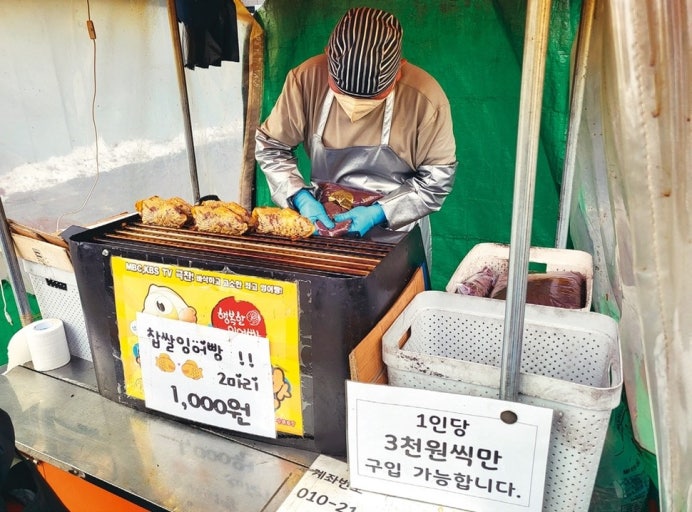
Walk down any busy street in Seoul around late October, and you will notice a sudden shift in the air. The crisp autumn breeze brings with it the faint, sweet scent of waffle batter and toasted sugar drifting from small tented carts parked outside subway exits.
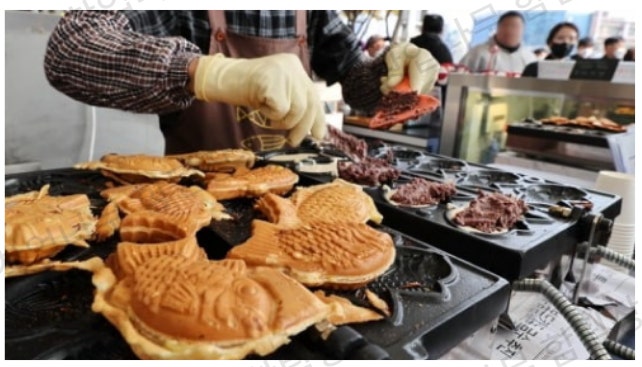
Follow your nose, and you will find an elderly vendor steadily rotating heavy cast-iron molds, pulling out piping-hot, fish-shaped pastries known as Bungeoppang (붕어빵).
Despite its aquatic shape (“bungeo” means crucian carp), there is no actual seafood involved. It is a warm, crisp-edged waffle cake stuffed with sweet fillings. More than just a comfort snack, bungeoppang is a seasonal ritual that reveals something delightfully quirky about everyday Korean life.
The “3,000 Won in Your Chest” Rule
South Korea is one of the most cashless societies on earth. You can easily spend months traveling through Seoul using nothing but a credit card or a transit pass on your phone—from high-end department stores down to tiny convenience stores.
Except during bungeoppang season.
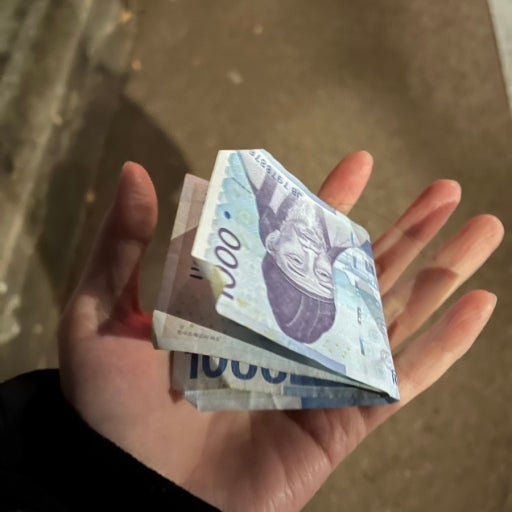
There is a popular local saying in Korea: “Always keep 3,000 won in your chest pocket during winter.”
Why? Because traditional street vendors rarely carry card terminals. While locals often pay via instant mobile bank transfer, international tourists cannot access Korean domestic banking apps. Having a crisp 1,000 or 5,000 won bill in your wallet ensures you never have to walk past a steaming cart empty-handed when a sudden craving strikes.
Red Bean vs. Custard: The Eternal Debate
Every Korean has an opinion on what belongs inside a bungeoppang, and the debate is treated with humorous seriousness.
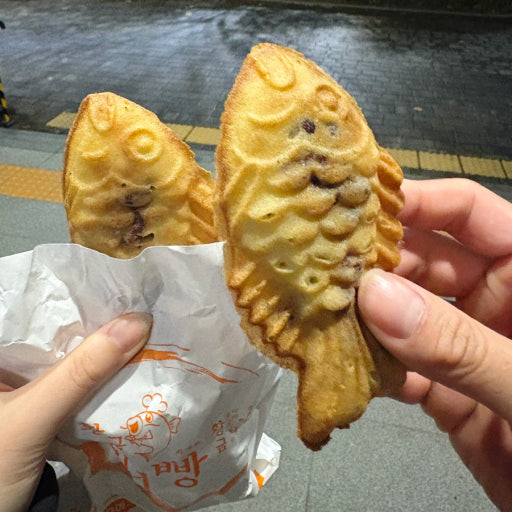
- The Classic: Sweet Red Bean (Pat / 팥)This is the original recipe that has warmed generations. The filling is made from slow-cooked azuki beans, gently sweetened so it isn’t cloying. The earthy, nutty flavor pairs beautifully with the crunchy, slightly salty outer shell.
- The Modern Challenger: Custard Cream (Shu-cream / 슈크림)Introduced a couple of decades ago, custard-filled bungeoppang quickly won over younger crowds and travelers who find red bean paste unfamiliar. It tastes like a warm, handheld Boston cream pastry.
- The New Experimental FlavorsIn trendy neighborhoods like Hongdae or Seongsu, you might encounter specialty stalls experimenting with pizza sauce and mozzarella, sweet potato puree (goguma), or rich Nutella. While fun, the classic red bean and custard still claim 95% of street sales.
Pro tip: If you are ordering with a friend, ask for a mix (“Ban-ban” / 반반) so you can try both without choosing a side.
What Does “Bungsekwon” Mean?
In Korean real estate, people love the suffix -sekwon, which denotes proximity to conveniences. Living near a subway station is yeok-sekwon; living near a park is gong-sekwon.
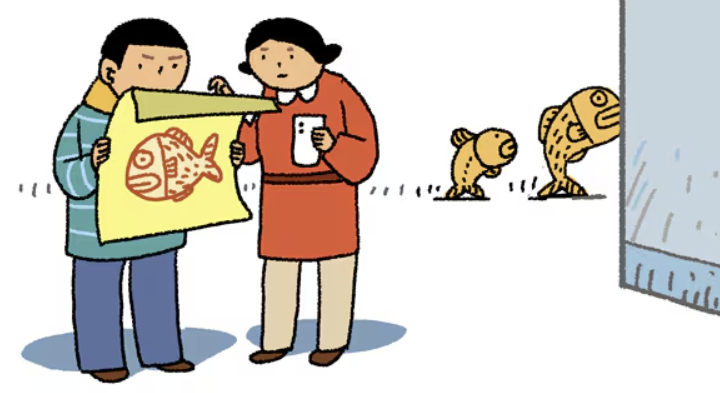
In recent years, rising ingredient costs and urban regulations caused traditional street carts to decline. In response, locals coined the word Bungsekwon (붕세권)—living in an area blessed with an active bungeoppang stall nearby. Korean developers even launched community-driven map apps where neighbors crowdsource active cart locations in real time.
For travelers, you won’t need an app. Just keep your eyes peeled around these reliable spots:
- Subway exits: Especially stations located slightly outside tourist centers (e.g., residential transfer hubs).
- Traditional markets: Gwangjang Market, Mangwon Market, and Namdaemun Market consistently host established vendors.
- Outside local supermarkets: Neighbourhood grocery stores often have a stall tucked right near the entrance.
How to Order Without Stress
Street vendors are usually friendly but busy, especially during evening rush hour (5 PM to 8 PM). Here is how to order smoothly:
- Look at the price sign first: Prices usually run around 2,000 won for 2 pieces, or 3,000 won for 3 pieces.
- Useful phrases:
- “Pat du-gae juseyo” (팥 두 개 주세요) = Two red bean, please.
- “Shu-cream du-gae juseyo” (슈크림 두 개 주세요) = Two custard, please.
- “Ban-ban juseyo” (반반 주세요) = Half and half, please.
- Hand over cash directly: There is usually a small wooden or plastic tray near the cart where you can place your bills and grab your change.
The Golden Rule: Eat It Immediately
Never put bungeoppang in your bag to save for later. The real magic lies in the contrast between the blistering hot, molten filling and the crisp, paper-thin batter around the fins and tail.
Take a paper bag straight from the vendor, stand a few steps away out of pedestrian traffic, and take your first bite while it’s hot enough to blow on. It might just be the warmest welcome Korea gives you this winter.
💬 Frequently Asked Questions (FAQ)
Q: Is bungeoppang vegetarian or vegan-friendly?
A: The classic sweet red bean filling is naturally vegan (made simply from azuki beans, water, and sugar). However, traditional batter often contains milk or eggs to achieve its golden crispiness. If you have strict dairy or egg allergies, check with the vendor, though plain red bean bungeoppang is generally vegetarian-friendly.
Q: How much does bungeoppang typically cost?
A: Prices vary slightly by neighborhood, but standard street rates are usually 2,000 KRW for 2 pieces or A3,000 KRW for 3 pieces. Specialty fillings like pizza or Nutella may cost around 2,000 to 2,500 KRW per piece.
Q: What is the difference between Korean Bungeoppang and Japanese Taiyaki?
A: While bungeoppang was originally inspired by Japanese taiyaki in the early 20th century, the two have evolved distinct personalities. Taiyaki typically features a thicker, denser, cake-like pancake batter. Korean bungeoppang uses a thinner, lighter batter focused on maximum edge crispiness and a chewy, mochi-like texture around the molten filling.
Q: When does bungeoppang season start and end?
A: Stalls begin appearing in late October as autumn temperatures dip, peak during the freezing months of December through February, and gradually pack up by late March or early April.