

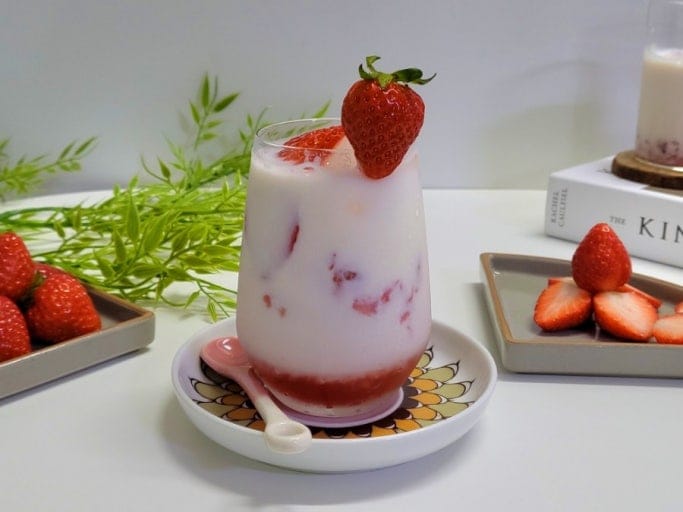
Lately, every time I walk past the supermarket or local market, the sweet scent of strawberries has been irresistible. Since it’s the end of the season, they were on sale for just $5 or $6 for a small box, so I impulsively bought two.
The problem is, I’m currently three months into a diet. Washing and eating them fresh is great, but when spring rolls around, who doesn’t crave that sweet, refreshing, cafe-style ‘Strawberry Latte’? But here’s the harsh truth: a single glass of a cafe strawberry latte easily packs 300~400 kcal, which is more than a bowl of rice…
So, I bought it. The 0-calorie sugar substitute: Allulose. I was a bit skeptical—could I really make strawberry cheong using only allulose and zero sugar? Would it even taste good? Here is my brutally honest review and some tips from my experiment.
1. What Exactly is ‘Cheong’ (淸)?
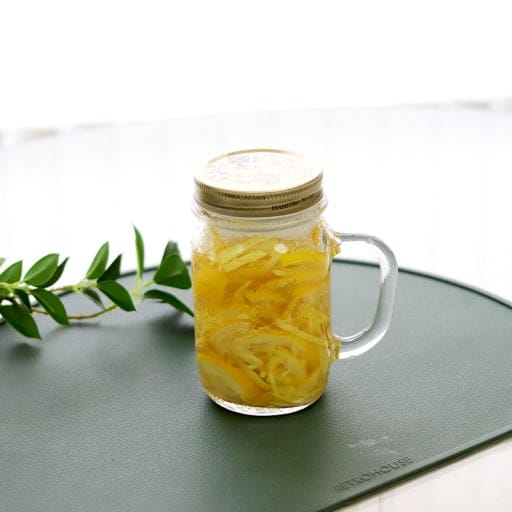
Before we dive into making it, let’s pause for a second! When you hear about Yuzu Cheong, Plum Cheong, or Strawberry Cheong in Korean cuisine, what exactly is that ‘Cheong’?
Cheong (淸) is a traditional Korean method for preserving food. Long before refrigerators existed, our wise ancestors would preserve seasonal fruits or plants by soaking them generously in honey or grain syrup (nowadays, we mostly use sugar) to enjoy them for a long time.
It uses the osmotic pressure of sugar to extract the moisture and nutrients from the fruit, creating a concentrated, flavorful syrup. While it does an amazing job of preserving the fruit’s natural taste and aroma, there is one fatal flaw: it requires a massive amount of fruit and sugar, usually in a 1:1 ratio! Keeping healthy seasonal fruits around is great, but consuming a sugar bomb makes it an unreachable temptation for dieters.
2. Sugar-Free Fruit Cheong: Is It Really Possible?
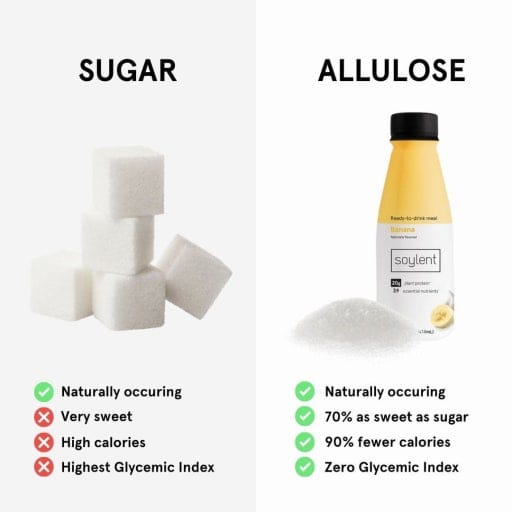
At first, I thought simply, “Can’t I just swap the exact amount of sugar with allulose?”
However, after doing some research, I learned that the sugar in cheong doesn’t just add sweetness; it acts as a powerful ‘preservative’ to prevent spoilage. I read terrifying reviews saying that if you use only allulose without the natural preservative power of sugar, the shelf life drops drastically, and mold grows very easily.
So, I gave up on the idea of making a huge batch to last all winter. Instead, I decided to make a small batch (500g of strawberries)—just enough to finish within a week.
3. The Ironclad Defense Against Mold: Washing and Drying is Everything
Because allulose cheong is incredibly vulnerable to moisture, I was practically obsessed with drying the fruit.
- Gently wash the strawberries in water mixed with a little baking soda, then rinse under running water.
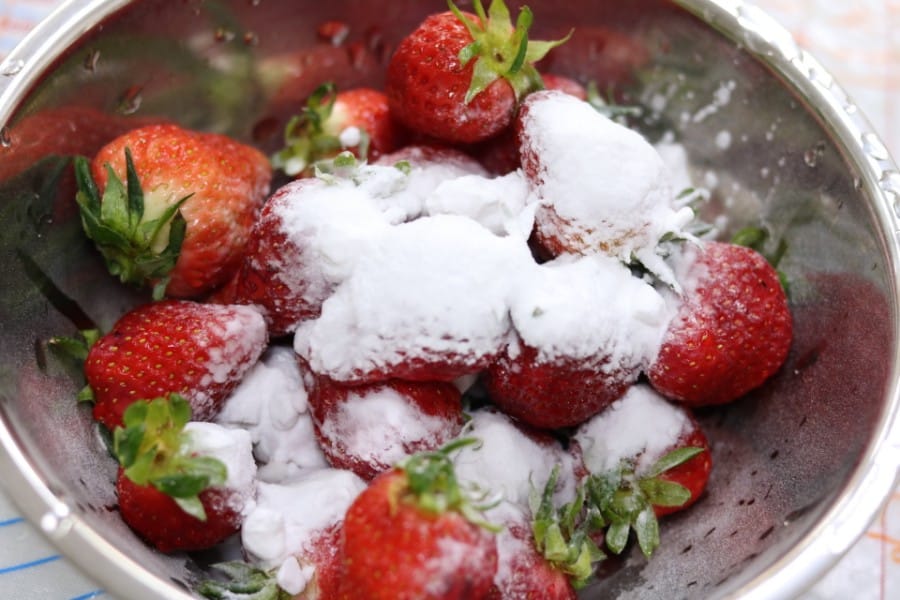
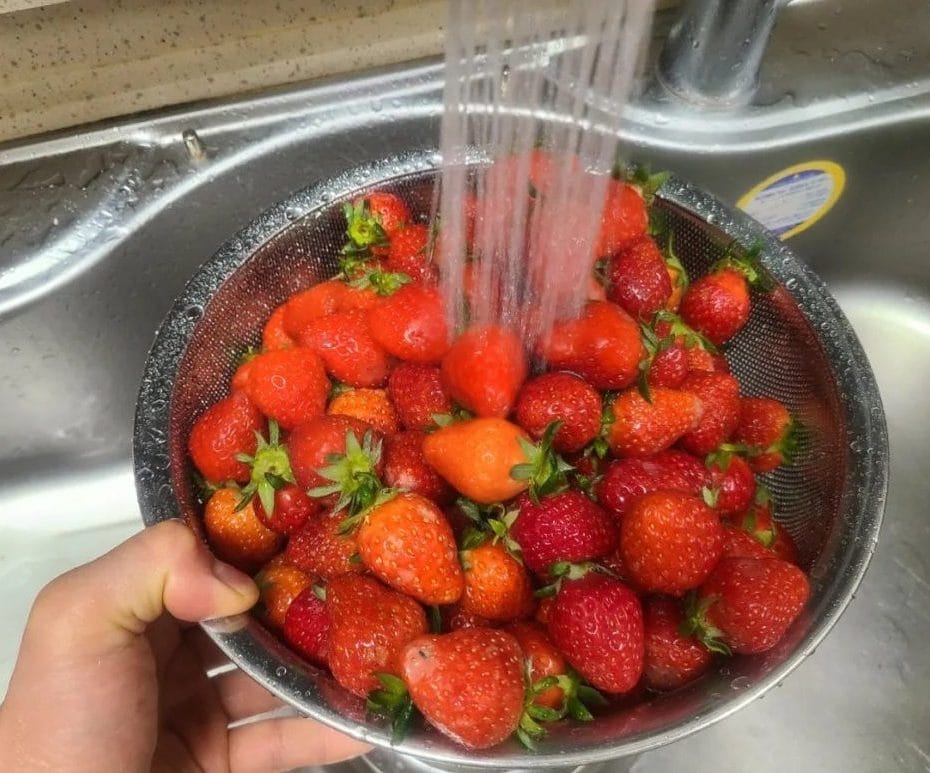
2. Remove the leafy tops, lay down some paper towels, and roll each strawberry to wipe away the moisture.
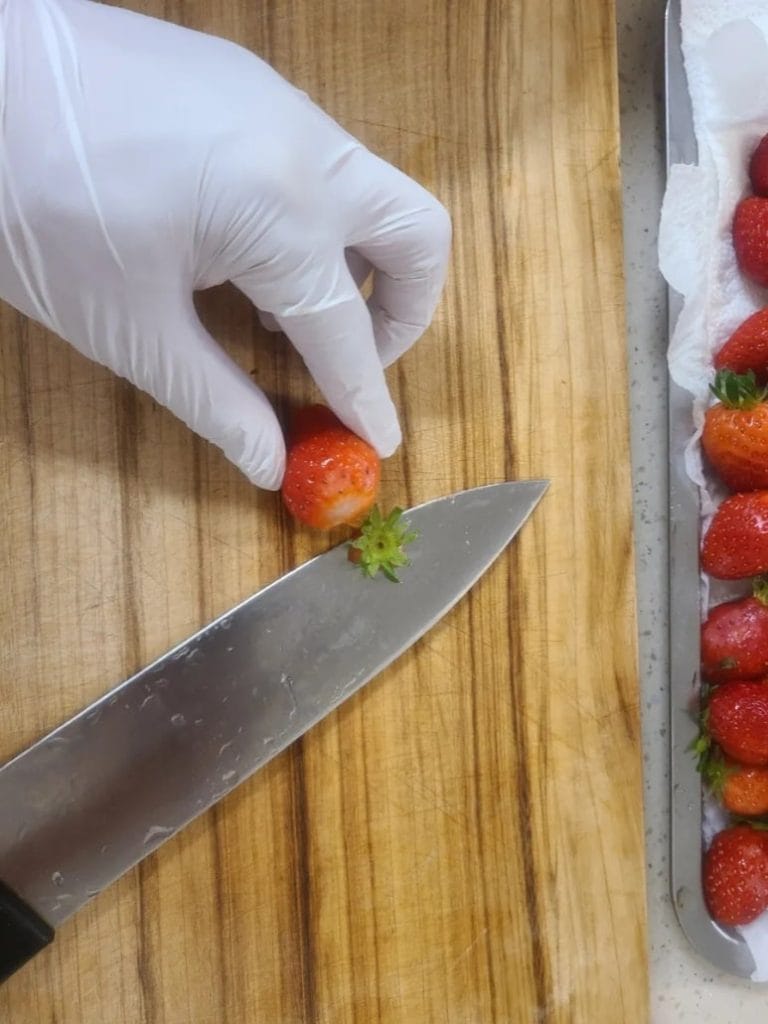
Pro Tip! Even if you wipe the outside, juice will leak from the cut tops. I laid them out on a strainer in a cool place and let them air-dry for about an hour until completely dry.
Of course, the glass jar I used was sterilized in boiling water (upside down) and dried until there wasn’t a single drop of water left.
4. The Golden Ratio for Allulose Strawberry Cheong (Fruit 1 : Allulose 0.8)
As mentioned earlier, the universal rule for regular handmade cheong is a 1:1 ratio of fruit to sugar. However, allulose is a liquid, meaning it has more moisture and lacks the sticky viscosity of sugar.
The ratio I used was 500g of strawberries to 400g of liquid allulose (a 1:0.8 ratio). Some people use a 1:1 ratio because allulose tastes slightly less sweet than sugar, but since my main goal was dieting, I stuck to 0.8.
- A Crucial Fix-It Tip: Since there’s no sugar to act as a preservative, make sure to drizzle 1~2 tablespoons of lemon juice over it at the end! It assists as a natural preservative and makes the flavor so much brighter. The added tartness actually makes the sweetness pop even more.
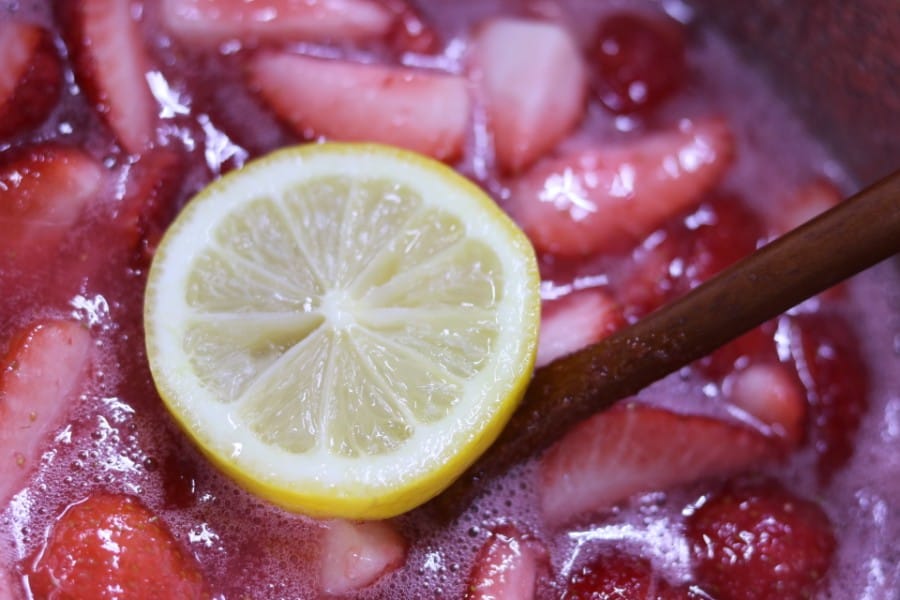
Dice the strawberries, put them in a bowl, add the allulose and lemon juice, and mix. Since you don’t have to wait for sugar crystals to melt, you can put it straight into the jar. This part was incredibly convenient!
5. Taste and Texture: A Cold, Honest Review
I left it at room temperature for about half a day, then immediately put it in the fridge. The next evening, I mixed it with some unsweetened Almond Breeze.
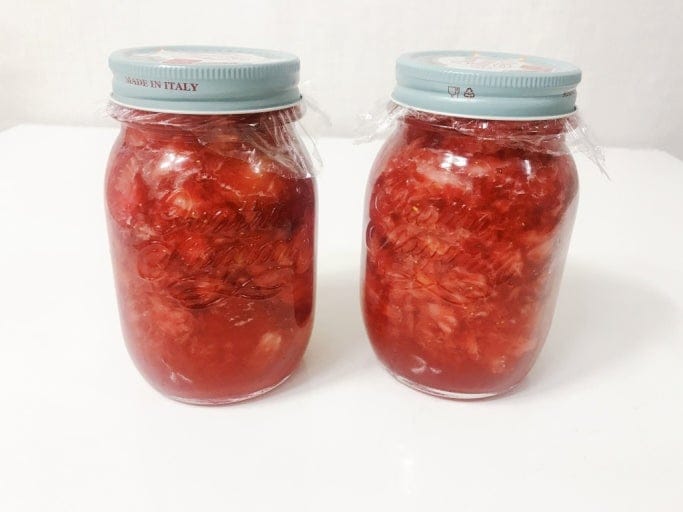
- Taste: Honestly, it’s not 100% identical to the thick, sticky strawberry cheong you buy at a cafe. Maybe about 85%?
- Texture: Cheong made with sugar draws out all the moisture, making the fruit pieces chewy. Because allulose has a weaker osmotic effect, the fruit stays a bit soft and mushy. The “syrup” is also more like a thin juice rather than a thick syrup.
BUT! As a dieter, I am entirely satisfied. To be able to drink this quality of a strawberry latte without worrying about blood sugar spikes or guilt? It’s amazing. If you mix it with low-fat milk, unsweetened soy milk, or almond milk, it tastes like a glorious, sinful treat. It’s also fantastic swirled into plain yogurt.
📝 Diet Strawberry Cheong: Just Remember These 3 Things (Summary)
Here is a three-line summary of what I learned from making this myself:
- Make Small Batches Often: Without sugar, its preserving power is weak, and the taste can change after 2 weeks. Make small 500g batches to eat within a week, or freeze it.
- Lemon Juice is Mandatory, Not Optional: It’s the secret ingredient that boosts preservation and perfects the flavor profile.
- Be Obsessive About Drying: It spoils easily as it is; if any external moisture gets in, mold will grow immediately.
We can’t live on just chicken breasts while dieting, right? If you have some end-of-season strawberries at home, try making a small jar of allulose strawberry cheong like I did. It will be an excellent weapon to happily fend off those 3 PM dessert cravings!
💬 Frequently Asked Questions (FAQ)
Q. Can I use Stevia or Erythritol (powder) instead of Allulose? A. You can, but I highly recommend liquid allulose! Powdered erythritol tends to crystallize again once it goes into the fridge, giving it a gritty texture. Its signature cooling aftertaste doesn’t pair very well with cheong, either. Liquid allulose blends smoothly, just like sugar syrup.
Q. Is the shelf life really only 1~2 weeks? I want to keep it longer! A. Because there are no natural preservatives (sugar), 1~2 weeks in the fridge is the maximum. If you want to stock up while strawberries are cheap, try dividing the finished cheong into silicone ice cube trays and freezing it! Popping a few frozen strawberry cheong cubes into milk makes it last much longer, and it turns into a delicious, slushie-like treat.
Q. I heard eating too much allulose gives you a stomach ache. Is it safe? A. That’s true. Because allulose and other sugar alcohols aren’t fully absorbed by the body, eating too much at once can cause stomach cramps or diarrhea, especially if you have a sensitive gut. The amount used in 1 or 2 glasses of strawberry latte a day is generally fine, but please adjust the portion to suit your own body!